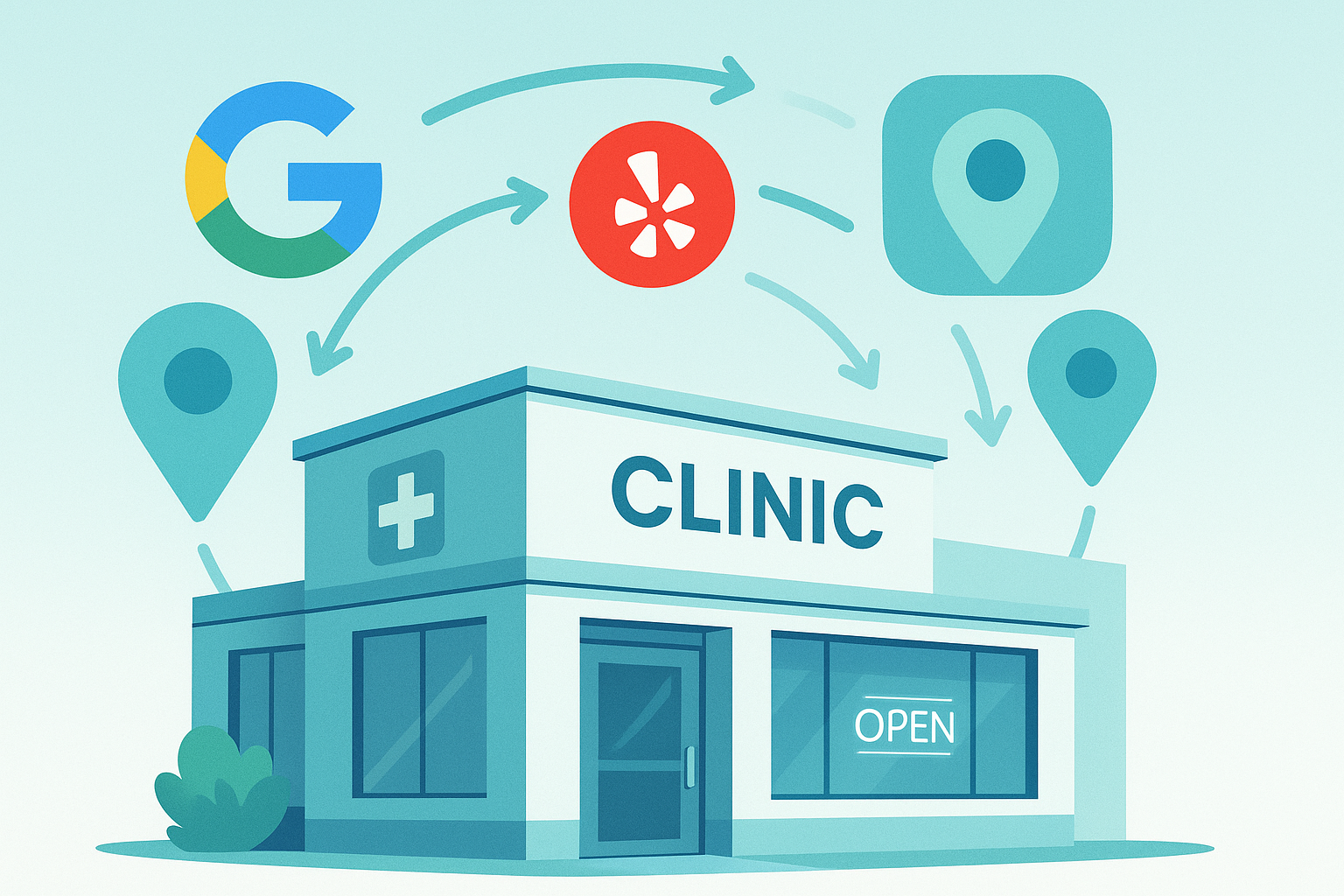

How to Maximize ROI from Directory & Listings Sync
“If your business isn’t where your customers are searching, you’re leaving money on the table, plain and simple.”
Shine Bright in a Foggy Market
Think of your business like a lighthouse on a foggy coast. Without strong, consistent signals in all the right places, potential customers will pass you by without even realizing you exist. That’s exactly what happens when your listings are scattered, inconsistent, or outdated across online directories. Your visibility fades, trust crumbles, and your return on investment suffers.
In this article, we’ll explore how syncing your business data across directories can be one of the most powerful yet overlooked drivers of ROI. You’ll learn how to streamline your listings, boost visibility, and turn searches into sales.
1. Claim Your Turf: Why Directory Listings Still Matter in 2025
Think listings are outdated? Not so fast. Directories like Google, Yelp, Apple Maps, and Bing Places still hold major influence over how and where customers find your business. They are more than digital phone books. These platforms act as trust validators for both customers and search engines.
When your business information is incomplete or inconsistent, it creates confusion. Confused customers don’t convert, and confused algorithms don’t rank you. Accurate listings build authority, increase visibility, and improve local search rankings.
Practical Tip: Audit your presence on at least the top 20 directories. Use tools like Moz Local or BrightLocal to get a full snapshot of where you stand.
Stat: Businesses with complete listings on 50 or more directories see 66% more traffic on average. (Source: Yext)
Quote: “Your location data is your digital front door.” – Howard Lerman, Co-founder of Yext
2. One Source of Truth: The Power of Centralized Syncing
Manually updating listings across dozens of platforms is like playing whack-a-mole. It’s time-consuming and prone to mistakes. That’s where centralized syncing tools come in. Platforms like Yext, Uberall, and Semrush Listing Management let you update your information in one place and push it everywhere else instantly.
This single-source approach ensures consistency. Whether you change your business hours, launch a new product, or move locations, all your directories stay accurate.
Practical Tip: Choose a syncing tool that supports API integrations and bulk uploads to simplify management at scale.
Stat: 73% of consumers lose trust in a business if its online listing information is incorrect. (Source: Local Search Association)
Quote: “Automation isn’t just efficiency, it’s brand safety.” – Neil Patel
3. Speed Wins the Click: How Listings Impact Local SEO
Showing up first is half the battle. Showing up right is the other half. Search engines use data from directories as ranking signals. When your listings are optimized with the right keywords, categories, images, and consistent business info, your chances of landing in the local 3-pack increase.
Directory syncing ensures that every location or service line is discoverable, accurate, and keyword-rich.
Practical Tip: Add category-specific keywords to your listings. For example, use “vegan bakery in Austin” instead of just “bakery.”
Stat: 92% of searchers pick a business that appears on the first page of local results. (Source: SEO Tribunal)
Quote: “If you’re not on page one, you’re invisible.” – Rand Fishkin, Founder of Moz
4. Trust is Earned, Not Assumed: The Role of Reviews in Listings ROI
People don’t just read reviews; they believe them. That’s why synced reviews across platforms provide a comprehensive picture of your reputation. Most listing management tools let you monitor, collect, and respond to reviews all in one dashboard. This not only builds trust but also improves your search visibility.
More positive reviews can lead to higher star ratings, more clicks, and increased conversions.
Practical Tip: Automate review requests after purchases or service completions to boost your volume.
Stat: 84% of people trust online reviews as much as a personal recommendation. (Source: BrightLocal)
Quote: “Your brand isn’t what you say it is. It’s what Google says it is.” – Chris Anderson, Wired Magazine
5. Measure What Matters: Tracking ROI from Listings Sync
If you can’t measure it, you can’t improve it. Don’t settle for vanity metrics like impressions or views. Focus on engagement metrics like click-to-call rates, direction requests, and revenue tied to local search.
Many directory platforms now offer analytics dashboards. Pair those with Google Analytics and UTM parameters to track how listings contribute to actual business results.
Practical Tip: Use UTM codes in your directory links to identify which platforms drive real conversions.
Stat: Businesses that track listing performance see a 30% lift in local conversions. (Source: Uberall)
Quote: “Data beats intuition.” – Jeff Bezos
6. Don’t Set It and Forget It: Ongoing Optimization is Key
The digital world moves fast. Hours change, new competitors emerge, and your services evolve. A one-time sync might help temporarily, but staying competitive requires ongoing maintenance.
Update your listings with seasonal promotions, fresh photos, new reviews, and product changes to stay relevant and visible. The best syncing tools make it easy to refresh your content regularly.
Practical Tip: Set a monthly calendar reminder to review and update all listing data.
Stat: Listings updated monthly receive five times more views than those updated quarterly. (Source: Google My Business)
Quote: “Consistency breeds credibility.” – John Jantsch, Author of Duct Tape Marketing
Final Thoughts: Nurture Your Listings, Reap the ROI
Your directory listings are more than static entries on the web. They’re digital seeds that, when nurtured, grow into real-world revenue. With centralized syncing, keyword optimization, active review management, and regular updates, you’ll not only boost your ROI but also build long-term customer trust.
So don’t just exist online. Be visible. Be consistent. Be everywhere your customers are looking.
The results will speak for themselves.